
When most people picture “STEM careers,” they imagine lab coats, long lectures and at least four years on a college campus. But in the energy world, there is another side to the story.
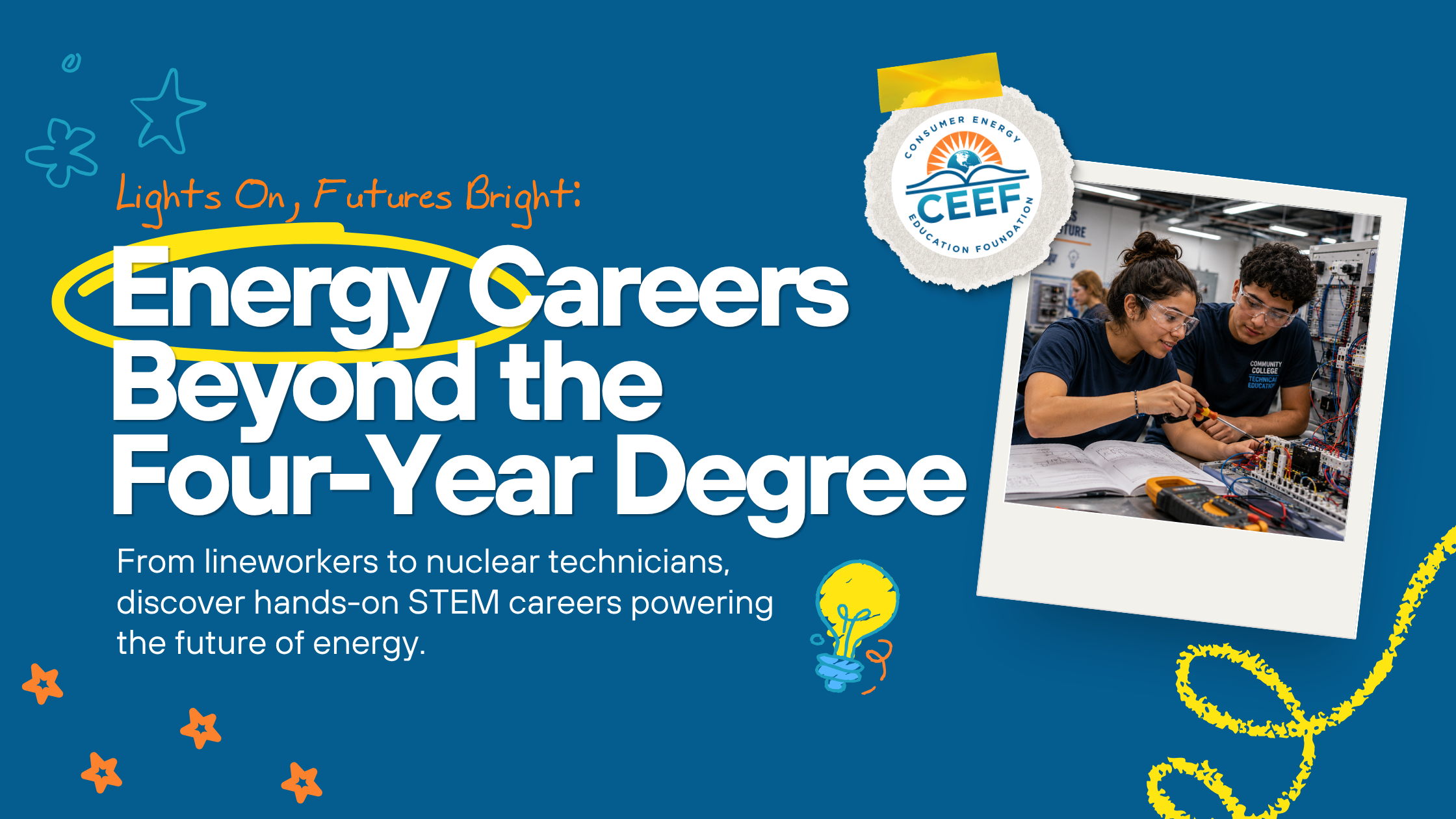
Across the country, students are stepping into well-paid, high-skilled energy jobs through technical programs, apprenticeships and on-the-job training. They are still using science and math. They are still solving big problems. They are just learning in a way that fits how they like to work.
Let’s flip the on switch and look at a few energy careers that trade lecture halls for real-world labs.
Lineworkers: Keeping Neighborhoods Connected
Any time the power goes out in a storm and flickers back on, a team of lineworkers has probably been hard at work nearby. They climb poles, repair lines and help keep the grid reliably running.
Most electrical power line installers and repairers start with a high school diploma, and then learn through technical classes and long-term, paid training. They use physics to understand how electricity moves, read maps of the grid and rely on strong safety skills every day.
And the payoff is real. National data show that lineworkers earn well above the average salary for all jobs in the United States, and the demand for their skills is expected to stay strong as we modernize and expand the grid for new homes, electric vehicles and new energy projects.
For a student who likes being outside, solving practical problems and seeing the results of their work light up a whole block, this path can be a great fit.
Nuclear Technicians: Science in the Control Room
Inside a nuclear power plant, technicians sit in control rooms full of screens and instruments. They monitor reactors, track energy output and measure radiation levels to keep everything running smoothly and safely.
Many nuclear technicians roles begin with a two-year associate degree in nuclear technology or a related field, followed by employer training. It is careful and detail-oriented work that blends chemistry, physics and computer skills.
These jobs also come with strong earning potential, which is often above the national median for all occupants, and they play a key role in providing steady, low-carbon electricity for communities.
For a student who loves lab days in science class, is curious about numbers and likes the idea of working with advanced technology, nuclear technician roles can turn those interests into a long-term career.
Carbon Capture Operators: New Jobs for a Changing Energy System
As industries work toward new advancements, new facilities are being built to capture carbon dioxide from power plants and factories. Here, operators and technicians work behind the scenes with pumps, valves, digital control systems and much more.
Many of these roles grow out of process technology programs at community colleges, certificates in instrumentation or plant operations or even prior experience in other kinds of industrial plants. Students learn how to run equipment safely, read real-time data on screens and respond when something in the system needs attention. Federal agencies are also funding carbon capture and storage training programs at universities and minority serving institutions to help prepare students for these emerging roles.
For the students that enjoy troubleshooting, seeing how all the moving parts fit together and enjoy hands-on learning, carbon capture facilities can become a strong future workplace.
What This Means for Students and Families
Four year colleges will always be important for many careers in engineering, science, and business. At the same time, it can be encouraging for families to know that the energy world also needs:
- Lineworkers who restore power after storms
- Technicians who keep advanced plants running safely
- Operators who help new technologies, like carbon capture, work in the real world
- And much more
Students can start exploring these paths through high school career and technical education programs, community college brochures, utility or plant tours and even local apprenticeship opportunities.
The big takeaway is simple: Curiosity about how the lights stay on, why the grid matters or how we power the future can grow into a bright, stable career in energy. And there is more than one way to get there.