
Summer break is supposed to be fun. It should be filled with sleeping in, popsicles, family time and a little freedom after a long school year. But for many parents, it also comes with a familiar worry: how do you keep kids engaged and curious when school is out?
That is where STEM camps can make a real difference.
A great summer camp is not about replacing summer fun with more homework. It’s about giving students the chance to build, test, explore, ask questions and stay connected to learning in a way that feels exciting, not forced. Research on summer learning show that high-quality summer programs can help students maintain that momentum, especially when they attend regularly and take part in structured, hands-on activities. One major RAND study found that students with strong attendance in voluntary summer programs saw meaningful benefits in math and reading after two summers.
That matters because STEM camps do far more than just fill time on a calendar. They help students stay curious, see future careers in a new way and allow them to imagine themselves in spaces they may never have considered before.
Learning That Feels Like Discovery
One reason STEM camps can be so powerful is that they make learning feel active. Instead of sitting at a desk all day, students might build a simple circuit, test a robot, design a bridge, explore how energy moves or solve a real-world challenge with a team. That type of learning sticks.
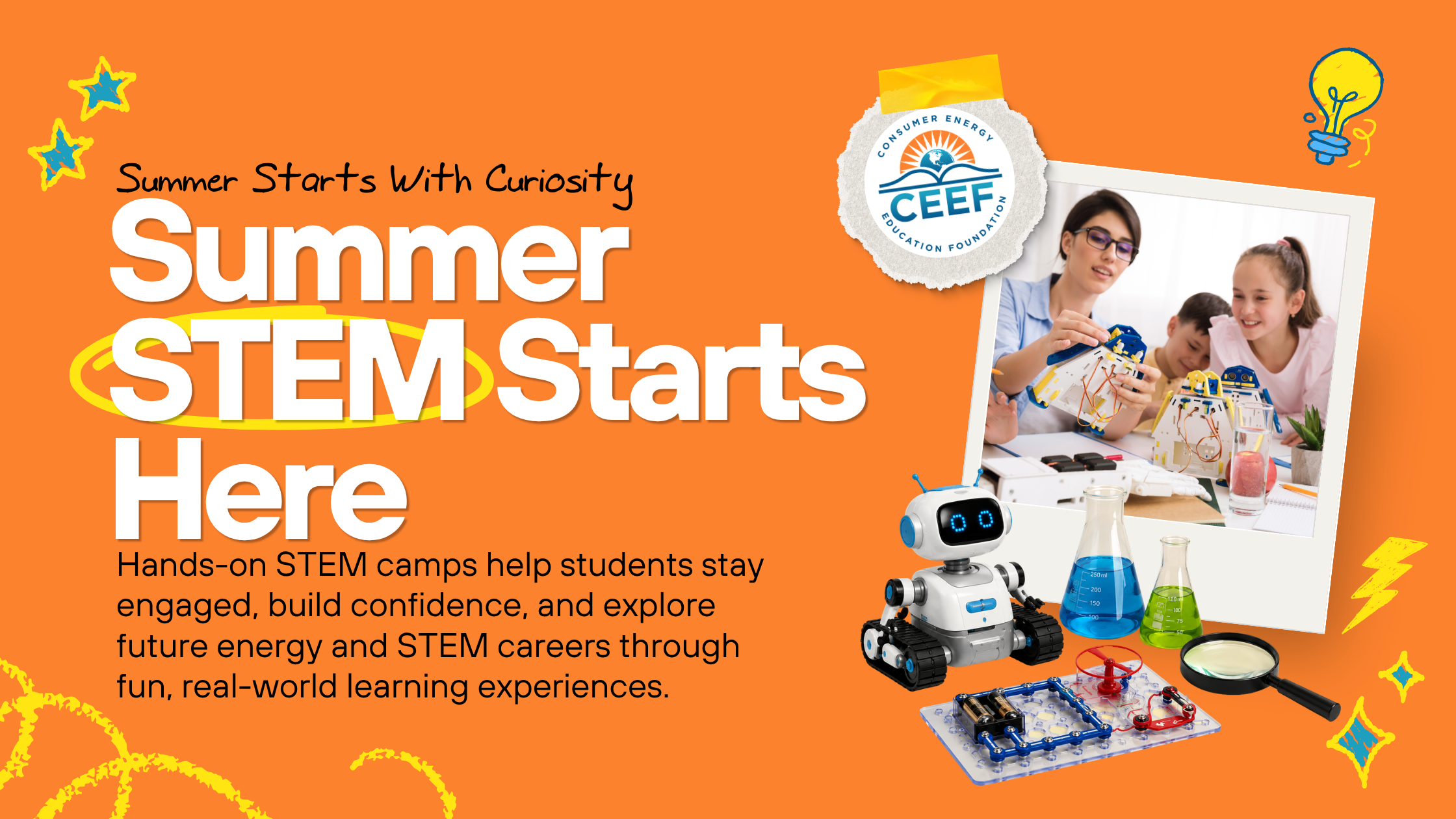
CEEF’s own summer camp model is built around exactly this idea. Students engage in hands-on STEM learning tied to the energy world of tomorrow, with activities designed to make science, technology, engineering and math feel practical, memorable and fun. These camps help prepare today’s students for tomorrow’s STEM and energy careers by connecting classroom concepts to real applications. Just as importantly, they are designed to spark curiosity.
That is a big deal for families. When kids can see how science shows up in the real world, whether through electricity, coding, engineering design or problem solving, learning stops feeling abstract. It starts feeling useful.
Keeping Young Minds Active Over the Summer
Parents often hear the phrase “summer slide,” but the bigger point is simple: kids benefit when they keep using their brains over the summer. Reading, problem solving, experimenting and creating all help students return to school with more confidence and ahead of the curve.
The best summer STEM programs can do this without making kids feel like they are trapped in school during July. Instead, they keep students engaged with projects, challenges, teamwork and hands-on exploration.
In other words, a strong STEM camp can help students keep their academic muscles active while still feeling like summer.
A Window Into Real Energy and STEM Careers
Summer STEM camps can help kids see that science and technology are not just subjects in a textbook. They are part of the world all around them. A student who enjoys building things might start to connect that interest to engineering. A kid who loves computers may begin to see how coding and technology can shape the future of energy in ways that feel exciting and real.
That kind of hands-on exposure can open doors. In a field like energy, where innovation is constantly changing how people power homes, solve problems and build for the future, one camp experience can spark a whole new level of curiosity.
That is the magic of camp. Sometimes one experience is all it takes to turn “That looks interesting” into “I want to learn more.”
More Than a Camp, a First Step
Not every student who attends a STEM camp will grow up to be an engineer, work in nuclear energy or build AI tools for the grid. And that is okay.
The real value is much bigger than that.
STEM camps help students practice curiosity. They teach kids how to ask better questions, work through challenges, try again when something doesn’t work and connect school subjects to real life. Those skills matter in every classroom and in almost every career.
For some students, camp is simply a fun week of discovery. For others, it may be the first step toward a future in a field they may have never considered before. Either way, that momentum is important.
Summer should still feel like summer. But when students spend even a part of it building, exploring and imagining what is possible, they do more than stay busy. They come back with new confidence, new curiosity and new ideas about what their future could hold.